The list is not unreasonable. The tasks are not beyond your capability. The pace at which the work should move is not a fantasy (you have moved at that pace before, on different days, under different conditions). But something is slowing you down that you cannot point to directly, and because you cannot point to it, the most available explanation is that the problem is you.
That explanation is wrong. But it is also the one most IT generalists carry, quietly, for years.
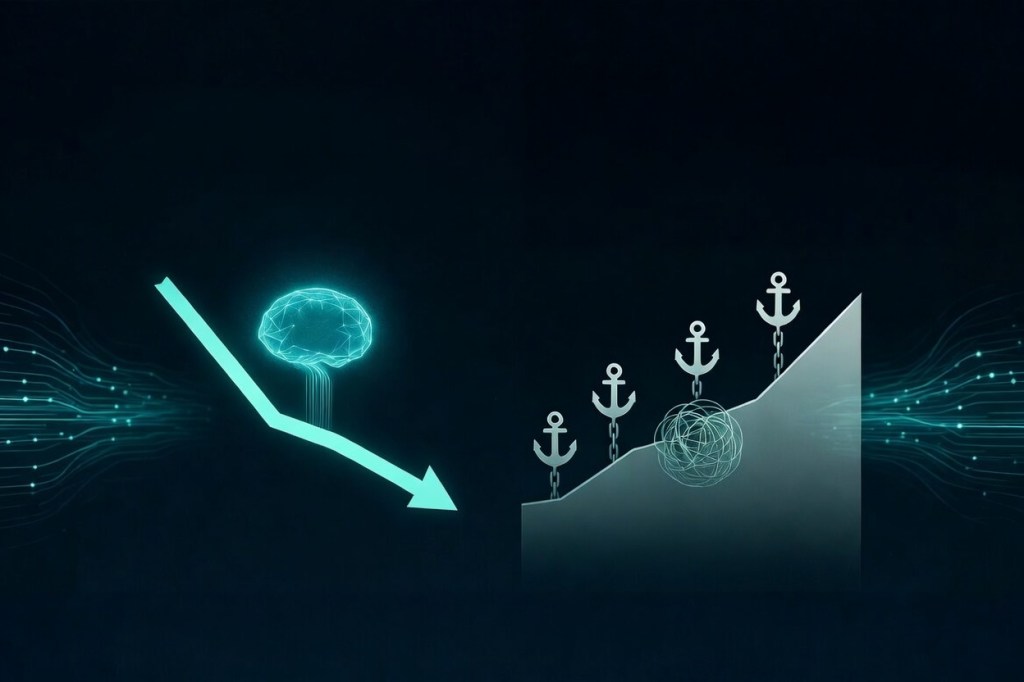
What is actually happening is structural. The resistance you feel between the work that exists and the work that gets done is not a productivity failure. It is the accumulated cost of operating inside an environment that consistently interrupts the conditions under which sustained work can occur. The distinction matters because a personal failure calls for personal correction, and no amount of personal correction addresses a structural cause.
What Interruption Actually Costs
The visible cost of an interruption is small. A question gets answered. Thirty seconds pass. Work resumes. From the outside (and often from the inside) it registers as the normal texture of a collaborative environment.
What does not register is the cost that occurs between the interruption and the resumption. The mental model that an IT generalist holds during complex work is not a simple list. It is a live structure: system dependencies mapped against current state, failure scenarios weighted by probability, change sequencing held in a specific order because the order matters. When an interruption lands, that structure does not pause. It collapses. What follows is not a return to work, it is a rebuild, and the rebuild consumes time and cognitive capacity that do not appear in any metric.
Multiply that across a working day. Across a week. The cumulative effect is not occasional slowdown. It is a consistent gap between the pace the work theoretically permits and the pace the environment actually allows. That gap is the resistance. It has a source.
How the Environment Produces the Pattern
Interruption at this scale is not a cultural accident. It is a learned behavior, and the system does the teaching.
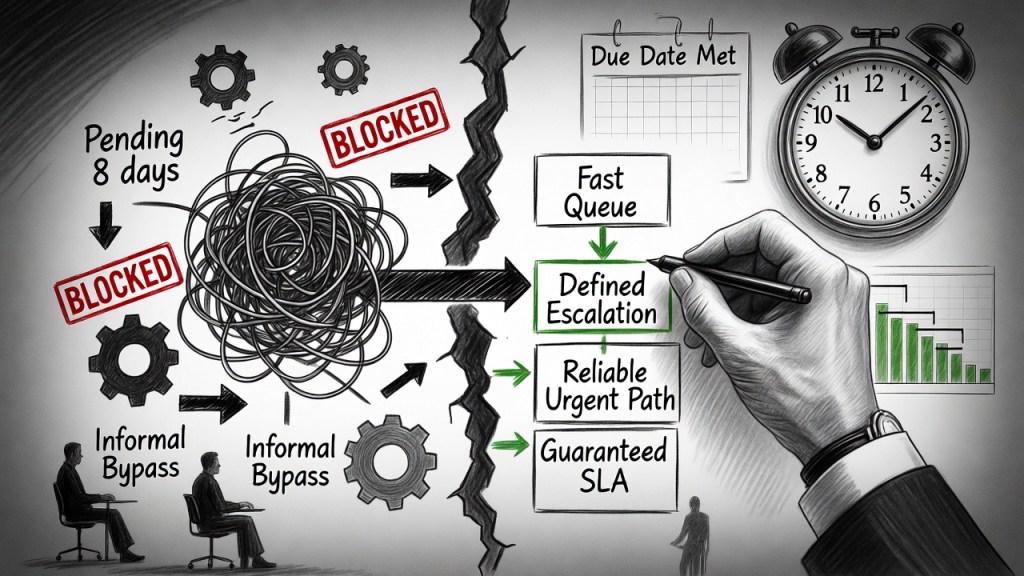
When formal channels (ticket queues, escalation paths, defined intake processes) are slow, inconsistent, or unreliable, people adapt. They find what works. In most IT environments, what works is finding the right person directly. Walking over, sending a direct message, calling. It is faster. It produces results. It is, given the environment as it actually functions, the rational move.
The problem is what that rationality produces over time. When bypassing formal channels is consistently faster than using them, the formal channels lose credibility for anything time-sensitive. They become the path for work that no one is pressing on. Everything with real priority moves through availability and proximity. The team does not decide this is how things should work. The system teaches them that this is how things do work, and they adapt accordingly.
The practitioner in the middle of a diagnostic sequence does not get interrupted because their colleagues are undisciplined. They get interrupted because the environment has made interruption the most reliable path for whoever needs something. The cause is upstream of the individual moment. Correcting the individual moment, asking for fewer interruptions, establishing focus periods, setting communication preferences, does not address what is upstream.
What Functional Looks Like
Understanding the structural source of the problem is not the same as being able to fix it unilaterally. Most of what is required to address interruption at the system level sits at the governance layer: escalation path clarity, queue discipline, intake process reliability, communication expectations with enough structure that bypassing them is not the obvious move. Those are not things an individual practitioner can install for themselves.
What the practitioner can do is develop an accurate read of the environment. Specifically, whether the formal channels in their organization are functional enough to route work reliably, or whether the organization is operating on informal paths as a matter of routine. That distinction matters for several reasons.
An environment with degraded formal channels is not stable. It is dependent on the availability and responsiveness of specific individuals. When those individuals are out, overwhelmed, or gone, the informal routing network breaks. Incidents that would have been contained get escalated poorly or not at all. Context that lived in one person’s head does not transfer. The system reveals (usually under pressure) that it was not a system, it was a set of habits held together by a few people.
Recognizing that pattern early is not a guarantee of being able to change it. But it is the difference between absorbing the operational cost as personal inadequacy and understanding it as a structural condition with a structural cause. That understanding changes how a practitioner reads their own experience, evaluates their environment, and eventually (if the opportunity arises) advocates for or helps design something more functional.
The Governance Connection
Environments that protect the conditions for sustained work are not necessarily quieter or more rigid. What distinguishes them is deliberateness about how work enters the system and what paths exist for things that require immediate attention. Queue discipline is maintained not as a bureaucratic preference but because reliable formal channels are what make informal shortcuts unnecessary. Escalation paths are defined not to restrict access but to ensure that the person who needs to make a decision is the one receiving the work, through a path that preserves enough context for the decision to be made well.
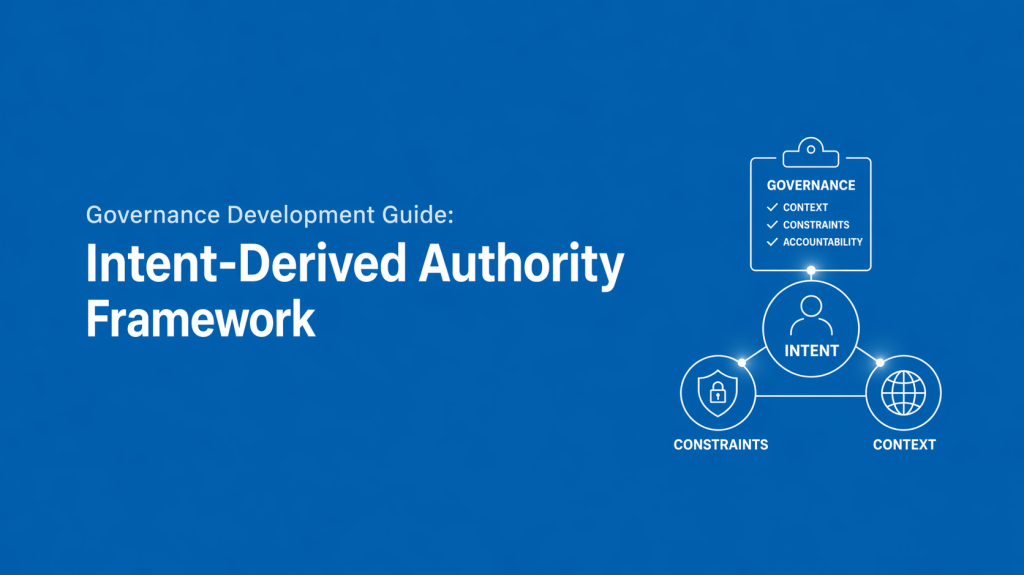
That deliberateness is a governance function. It requires someone with the authority to define how work moves to make and maintain those decisions. When that governance exists and functions, the practitioner’s cognitive capacity is available for the work. When it does not, that capacity is being consumed by the overhead of navigating an environment that routes work through whoever can be reached.
The resistance you feel at the end of a day when the list has not moved the way it should have is often that overhead, accumulated. It is not evidence that you are behind. It is evidence that the system is consuming capacity it should be protecting.
Naming that accurately is where the correction begins, even when the correction itself requires more than any individual can apply alone.