Intent
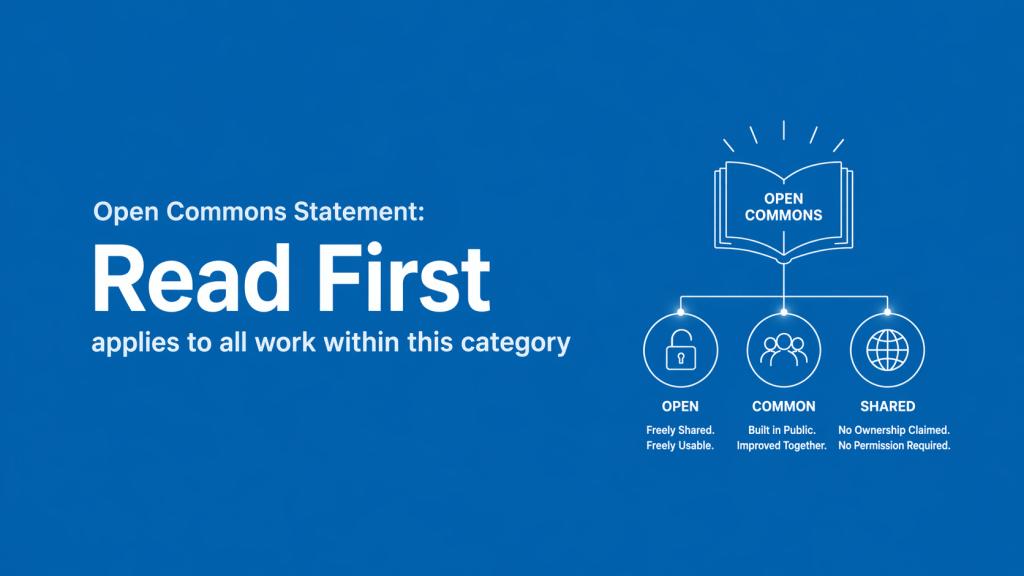
This work is being developed as an open commons framework.
The goal is not to create a proprietary product or platform, but to define a foundational model for how authority is derived and governed in systems operating under probabilistic, context-driven conditions. The value of this work increases through broad visibility, critique, and adoption—not exclusivity.
Scope
The core concepts, architectural model, and governance framework are intended to remain open.
This includes:
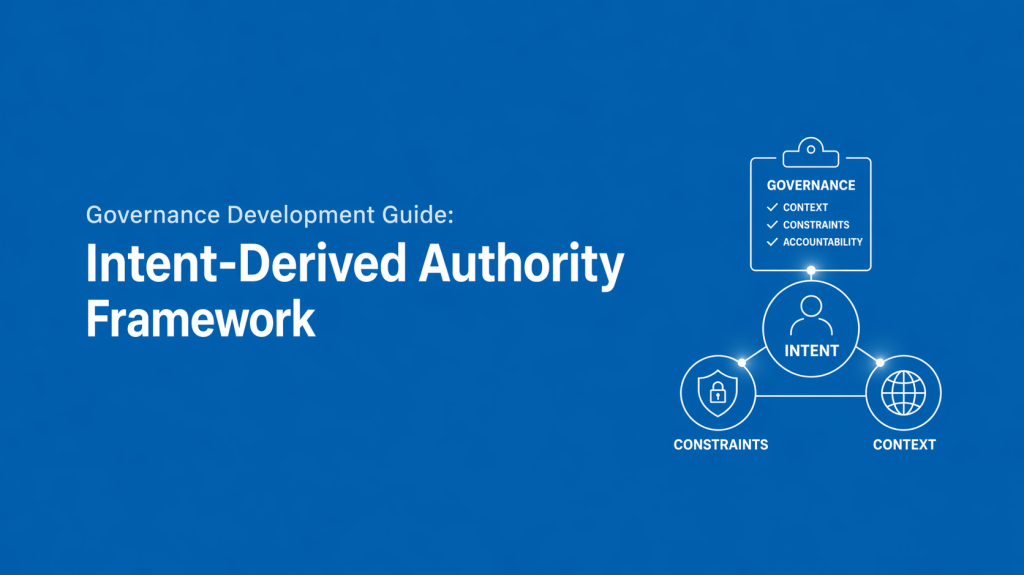
- the authority model (Actor + Intent + Context + Constraints)
- the execution-time governance approach
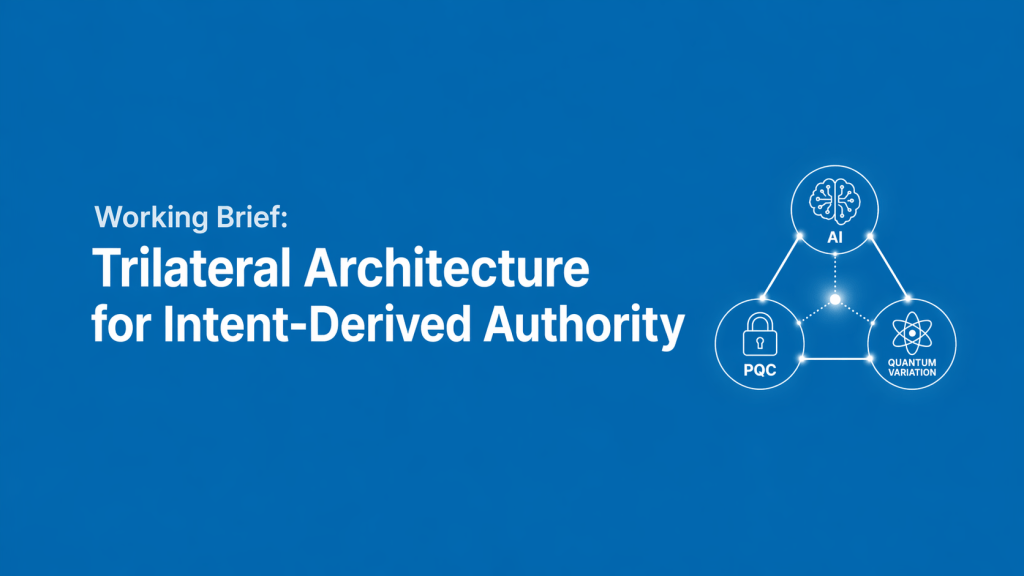
- the trilateral architecture hypothesis (AI, PQC, and quantum variation)
- associated governance and constraint principles
These elements are being developed as shared infrastructure, not controlled intellectual property.
Commercial Participation
Commercial implementations are expected and encouraged.
Organizations may build products, platforms, and services that leverage this framework. Differentiation, optimization, and domain-specific applications are natural outcomes of adoption and are not restricted.
Contribution Model
The long-term viability of this framework depends on the core remaining open and evolving through shared contribution.
Enhancements, refinements, and insights that materially advance the core model are best developed in the open, where they can strengthen the ecosystem as a whole. This is not framed as an obligation, but as a structural reality: closed improvements to foundational models tend to fragment adoption, while shared improvements accelerate it.
Position on Ownership
This is not being developed as a proprietary asset.
The intent is to establish a common reference model that cannot be easily enclosed or controlled by a single entity. The direction is toward broad accessibility and resilience through openness.
Role
The role here is not inventor or owner, but catalyst.
The objective is to identify the architectural gap, articulate a coherent direction, and bring together the right perspectives to pressure-test and evolve the model. The outcome is intended to stand independently of any single individual or organization.
Framing
This is not a replacement for existing systems, nor a commercial offering in its current form.
It is a candidate framework for deriving and governing authority at execution time in systems operating under probabilistic, context-driven conditions.
Closing
The expectation is that this work will change as it is tested, challenged, and extended.
That process is the point.
Posted: 04/17/2026 – 03:43:00 CDT